


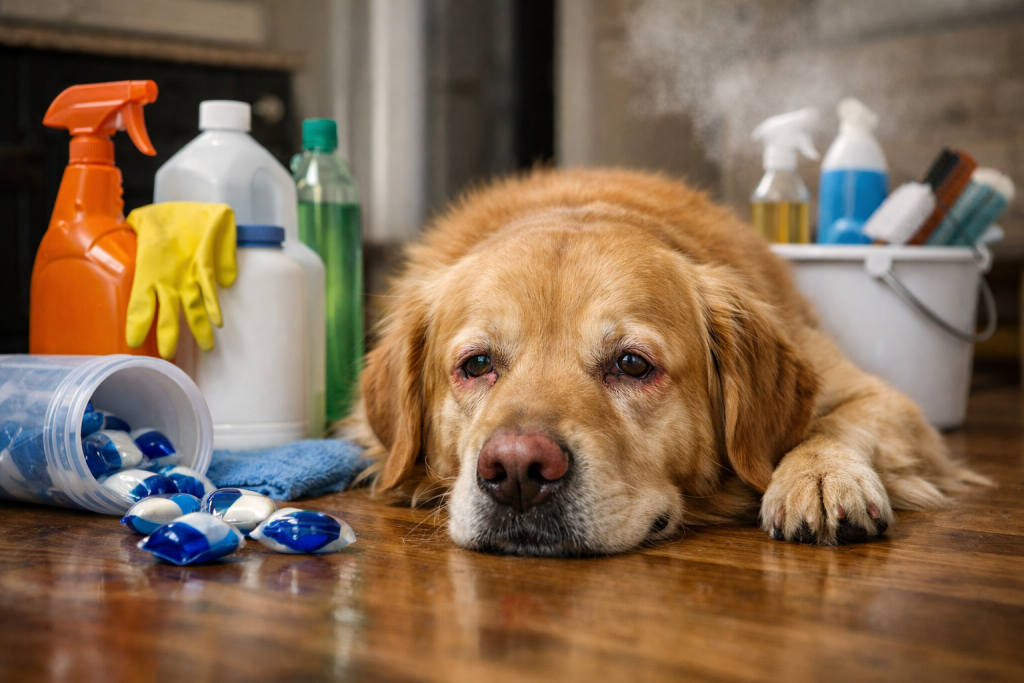

Pets and dogs, for that matter, are loving things to have around the home to keep you company and make the place lively. They are also sensitive to some cleaning, refreshing, and pest-control agents and treatments used around the home. You should be careful with the type and brands you use to avoid endangering your dog. Some may cause mild allergies and others can cause severe health issues.
The exposure comes from either skin contact, breathing fumes, or licking treated surfaces. At the same time, you may not be aware of the possible risks of even the most popular household chemical brands. Watch out for any signs of reaction. Early detection of chemical sensitivity is necessary for a dog’s health and comfort.
Here are some of the common signs.
1.) Often Scratching the Body
The most common sign that will make you detect a chemical reaction is the dog scratching its body with its paws or against rough objects. The dog does that several times a day in an attempt to put off the sensitivity. If not treated as soon as possible, you will also see some redness on the skin, hot spots, rashes, flakiness, and paw chewing.
The most likely cause of these activities is contact with household floor cleaners, carpet shampoos, strong laundry detergents, and pest control chemicals. This irritation may seem more often after you have been cleaning the house or tending the yard. Since you can’t do without these applications, you are advised to use pet-safe or fragrance-free products.
2.) Sneezing and Breathing Problems
Different household chemicals respond differently to sensitivity. While most will start with skin irritation, some will affect the respiratory system. And if your dog is allergic to them, he or she may begin to sneeze when near the irritant. These are mostly strong scents and airborne chemicals known to irritate a dog’s respiratory system, such as aerosol sprays, furniture perfumes, and long-lasting air fresheners. When you find your dog wheezing, sneezing frequently, and having watery eyes, identify what you may have started using and stop it. Puppies and senior dogs are the most affected by airborne chemicals.
3.) Digestive Problems
Where the household chemicals come into contact with dog food and water, or by licking paws or surfaces that contain chemical residue, it may result in vomiting, diarrhea, drooling and refusing to eat normally. Products that can easily get into your dog’s digestive system are floor cleaning products, garden fertilizers and non-organic pesticides.
4.) Behavioral Changes
Prolonged chemical exposure and sensitivity can affect your dog’s mood and energy levels. You will notice a decline in playfulness, a refusal to respond to your calls, sleeping too much, and avoiding company. This change in behavior occurs at any time when chemical exposure is too strong for the organs to handle, creating stress or discomfort.
5.) Ear Irritation and Watery Eyes
The ears and eyes are the two most active organs that the dog uses to react to environmental stimuli. When irritated by chemicals, they can become sensitive, leading to symptoms such as red or watery eyes, Frequent blinking, Head shaking and Ear scratching. The most common causes are Household chemicals that remain in the air after spraying and scented products. When you purchase a new spray product, watch out for these early symptoms to prevent further damage.
Recommended Household Pest Control
One of the household chemicals that affects dogs and puppies the most is pesticides used to protect pets from fleas, ticks, mosquitoes, among others. While they have been traditionally used as pesticides, they have been found to irritate sensitive dogs. That’s because they are formulated with dangerous chemical compounds that can be harmful if not used properly, especially at high concentrations.
With advances in technology, many pet owners are exploring gentler alternatives to controlling pests that are attracted to dogs. One of the best ways is switching to a natural flea collar for dogs, such as organic collars, which are designed with plant-based ingredients like tree oils to keep pests away. These products are an alternative to chemical treatments for fleas and ticks. They have a lower chemical compound for everyday protection, even for outdoor activities. However, pet owners should still monitor their dog for any reactions to any new product.
Conclusion
Many dogs for domestic companionship are known to be highly sensitive to various household chemicals, especially when used often, increasing their concentration. Being able to spot these symptoms early may help you avert a health crisis for your pet. Always be careful and note any behavior change when you introduce new cleaning habits and pest prevention methods at home.
Whenever possible, use organic cleaning agents and, at the minimal levels possible, include natural pest control options. Otherwise, keep your dog from exploring surfaces that have been treated with such chemicals for a few days. These measures will avoid unnecessary medical costs and maintain a healthier home environment for pets.